Tree roots in a sewer pipe are the single most common reason a Campbelltown drain keeps blocking after it has already been cleared. Roots find a hairline crack or a loose joint, push through it, and then grow into a dense mat inside the pipe that catches everything flushed past it. The early signs are easy to miss, such as a slow shower, a gurgle from the toilet, or a faint smell near an outdoor gully. The blockage usually announces itself properly at the worst possible time.
This guide covers how roots get in, the signs worth acting on, and what drives the cost of a permanent repair.
How Do Tree Roots Get Into a Sewer Pipe?
Roots do not break into sound pipework. They exploit a fault that already exists, then widen it as they thicken.
Older Pipes Give Roots an Opening
Plenty of housing stock across Campbelltown, Ingleburn and Minto still runs on vitrified clay sewer lines laid in short lengths with mortared or rubber-ring joints. Ground movement through the shrink-swell clay soils common to the region shifts those joints by a few millimetres, and a few millimetres is all a root hair needs. Newer PVC lines fare better, though poorly bedded sections and cracked junctions do the same job.
What the Roots Are Actually Chasing
A sewer line carries warm, moist, nutrient-rich water — exactly what a root system searches for through a dry Macarthur summer. Vapour escaping from a faulty joint draws roots toward the pipe long before they touch it. Once inside, they branch out into the flow rather than along it, which is why a root mass blocks a drain so completely compared with a grease build-up of the same size.
What Are the Warning Signs of Tree Roots in a Sewer Line?
Root intrusion builds slowly, so the symptoms arrive in a fairly predictable order. Any two of these together justify a proper look at the line.
- Drains that clear after a plumber visit, then slow down again within weeks or months — the clearest single sign of root intrusion rather than a one-off blockage.
- Gurgling from a toilet or floor waste when a washing machine empties or a bath drains.
- Toilets that need a second flush, or a water level that rises then drains away slowly.
- A damp, sulphurous smell around an outside gully trap or overflow relief gully.
- One patch of lawn that stays greener and softer than the rest, often directly above the sewer line.
- Sewage surcharging from the overflow gully during heavy rain, when extra flow meets a partly blocked pipe.
The repeat-blockage pattern matters more than any single symptom. A line cleared three times in a year is not unlucky — it has a structural fault feeding it. Smart Choice Plumbing has documented exactly that on local jobs, including a collapsed section near a boundary connection that earlier quick fixes had never identified.
Which Trees Cause the Most Sewer Blockages in Macarthur Yards?
Fast-growing species with shallow, aggressive, water-seeking roots cause most of the damage. Common offenders in South-West Sydney backyards include willows, poplars, liquidambars, camphor laurels, rubber trees, figs and several eucalypt species. Bamboo and large privet hedges cause the same trouble at a smaller scale.
Distance is a weaker predictor than most homeowners expect. A mature tree can send roots well beyond its canopy width, so a neighbour’s liquidambar three properties down the fence line can be the source of a blocked drain on your side of the boundary.
How Does a Plumber Confirm Tree Roots Are the Cause?
Guesswork is what turns a one-off repair into an annual expense. The line has to be cleared first, then looked at.
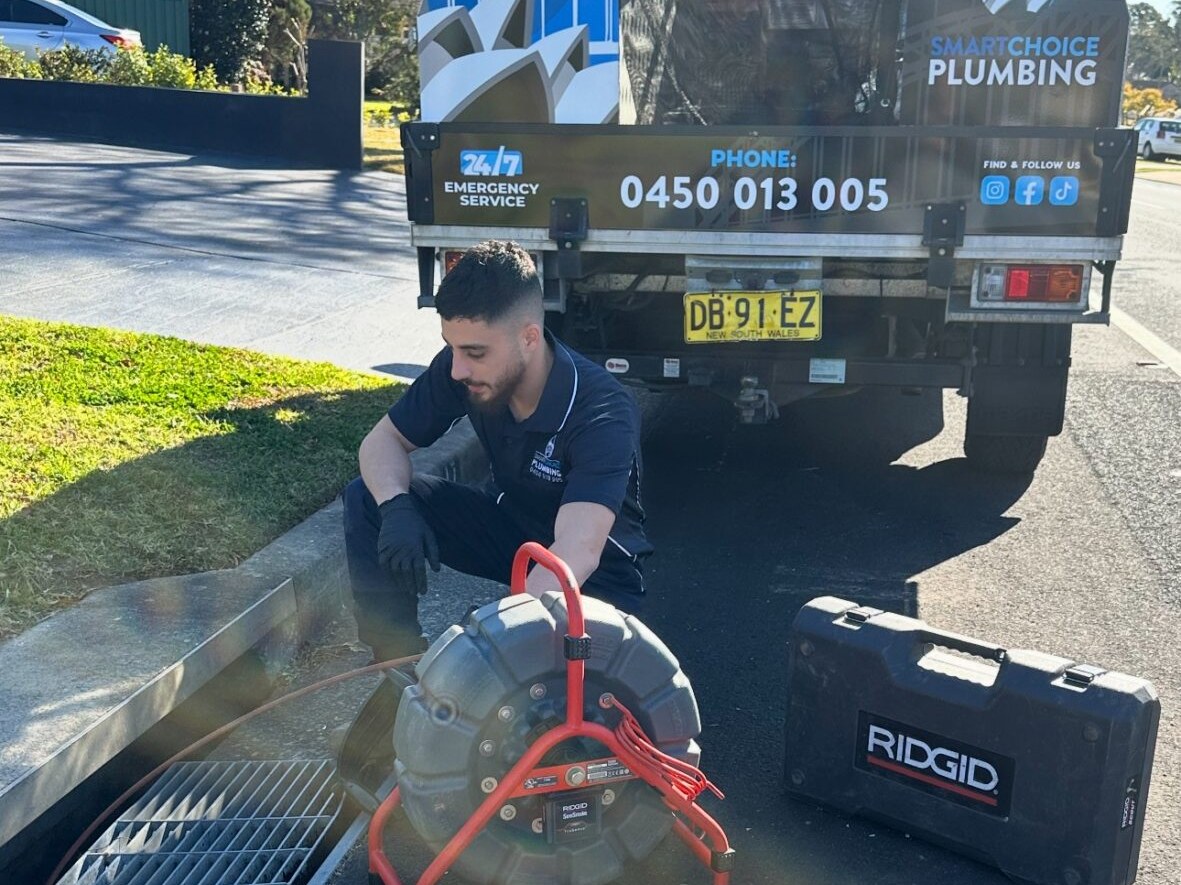
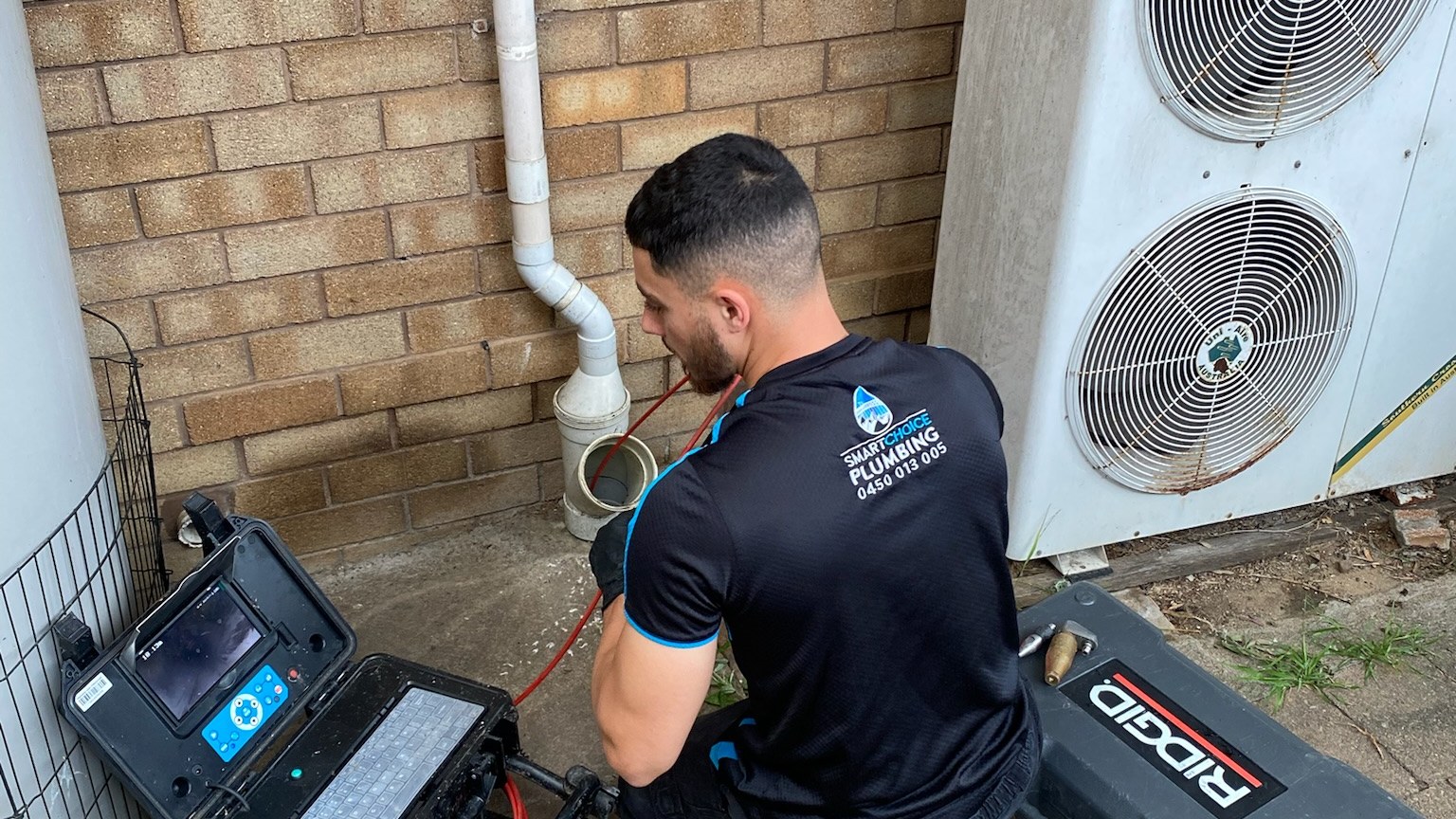
High-pressure jet blasting cuts the root mass out and scours the pipe wall clean, which restores flow and — just as importantly — makes the pipe readable. A CCTV drain inspection is then run through the cleared line to find the exact entry point, measure how far along it sits, and grade the damage. A pipe locator marks the position and depth above ground so any excavation is targeted rather than exploratory.
That footage is what separates a pipe with one intruded joint from a pipe with a fractured or collapsed section, and the two need very different repairs.
What Does It Cost to Fix Tree Roots in a Sewer Pipe?
There is no single figure, because the repair scales with what the camera finds. Smart Choice Plumbing confirms pricing before any work begins, and the variables below are what move it.
- Clearing only, versus clearing plus a structural repair — cutting roots out restores flow but leaves the entry point open.
- The length of pipe affected: one intruded joint is a very different job from a run with multiple fractures.
- Depth and access — a line under a driveway, slab or established garden costs more to reach than one under open lawn.
- Repair method: trenchless pipe relining versus excavating and replacing the damaged section.
- Whether the fault sits on private pipework or at the point of connection to the sewer main.
That last point decides who pays. Sydney Water is clear that the property owner is responsible for clearing tree roots that enter the junction at the point of connection, and for damage to the junction caused by those roots — see its guidance on responsibility for wastewater repairs. Knowing which side of that line the fault sits on is one of the practical reasons to get the pipe on camera.
Can Tree Roots Be Kept Out of the Pipe for Good?
Only by removing the opening they use. Root cutting, chemical foaming and copper sulphate treatments buy time — usually a season or two — because the crack or open joint is still there when the roots regrow.
A permanent fix seals the pipe. Pipe relining draws a resin-saturated liner through the existing pipe and cures it in place, forming a continuous jointless pipe inside the old one with no roots to enter through. Where a section has collapsed or lost its shape, excavation and sewer repair is the honest answer instead — the comparison is set out in this guide to relining versus replacement.
Prevention helps on new work: keep hungry species clear of the sewer alignment, and have any line with known root history camera-checked every couple of years rather than waiting for the next backup.
Sort the Cause, Not Just the Symptom
A drain that blocks every winter is telling you something specific, and clearing it again will not change the answer. Smart Choice Plumbing jet blasts the line, puts a camera through it, shows the homeowner what is actually happening inside the pipe, and quotes the repair that fixes it properly. Every job is backed by a lifetime labour guarantee, and the phone is answered around the clock, weekends and public holidays included.
Dealing with tree roots in a sewer pipe across Campbelltown, Camden or the wider Macarthur region? Call Smart Choice Plumbing on 0450 013 005
Frequently Asked Questions
How do I know if tree roots are in my sewer pipe?
Repeat blockages are the strongest indicator — a line that clears then slows again within weeks usually has roots feeding back in. Gurgling toilets, slow drains across several fixtures and a damp smell near the outside gully support it. A CCTV drain inspection confirms it and shows exactly where the roots enter.
Will chemicals or root killer get rid of tree roots in a drain?
Foaming root treatments and copper sulphate kill the roots inside the pipe but leave the crack or open joint they came through. Roots regrow through the same opening, generally within a season or two, so chemicals are a holding measure rather than a repair.
How much does it cost to remove tree roots from a sewer line?
The price depends on the length of pipe affected, the depth and access, and whether the pipe needs relining or excavation after clearing. Contact Smart Choice Plumbing directly for an accurate quote — all pricing is confirmed before any work begins, with no obligation to proceed.
Do I have to remove the tree?
Usually not. Sealing the pipe with a relined, jointless section removes the entry point, which resolves the problem without touching the tree. Removal is only worth discussing where a very large specimen sits directly over the sewer alignment and the pipe has failed structurally along its length.
Who pays for tree root damage — me or Sydney Water?
Property owners are responsible for their own sewer pipework, including clearing roots that enter the junction at the point of connection and repairing junction damage those roots cause. Faults inside the water authority’s main are its responsibility, which is why identifying the exact location on camera matters.