Jet blasting a blocked drain clears the pipe properly; drain snaking clears a path through it. That is the honest difference. A snake (or electric eel) punches a hole through the blockage so water runs again, while high-pressure water jetting scours the full diameter of the pipe and flushes the debris out. For a one-off blockage in a Campbelltown home, snaking often does the job. For a drain that keeps backing up every few months, jet blasting is usually what ends the cycle.
How Drain Snaking Works
A drain snake is a flexible steel cable fed down the pipe, with a cutting or auger head on the end that spins as it advances. The head bores into whatever is causing the blockage — a wad of wet wipes, a build-up of fat, a root mass at a joint — and breaks it apart enough for water to move.
Its strength is reach and control. A cable travels around bends that other equipment cannot, and a plumber can feel the resistance through the cable, which gives a real clue about what sits down there and how far along it is. Older Macarthur homes with earthenware sewer lines and multiple bends are exactly where that feel matters.
The limitation is what stays behind. Cutting a 40mm channel through a 100mm pipe restores flow within minutes, but the grease film, silt and fine root hair coating the pipe wall are all still there — which is why a snaked drain can block again in the same spot a season later.
How Jet Blasting Works
Jet blasting, also called drain jetting or hydro jetting, sends water down the pipe through a specialised nozzle at pressures typically between 3,000 and 5,000 psi. Rear-facing jets drive the hose forward and blast debris back toward the access point, so the pipe is scoured wall to wall rather than punctured through the middle.
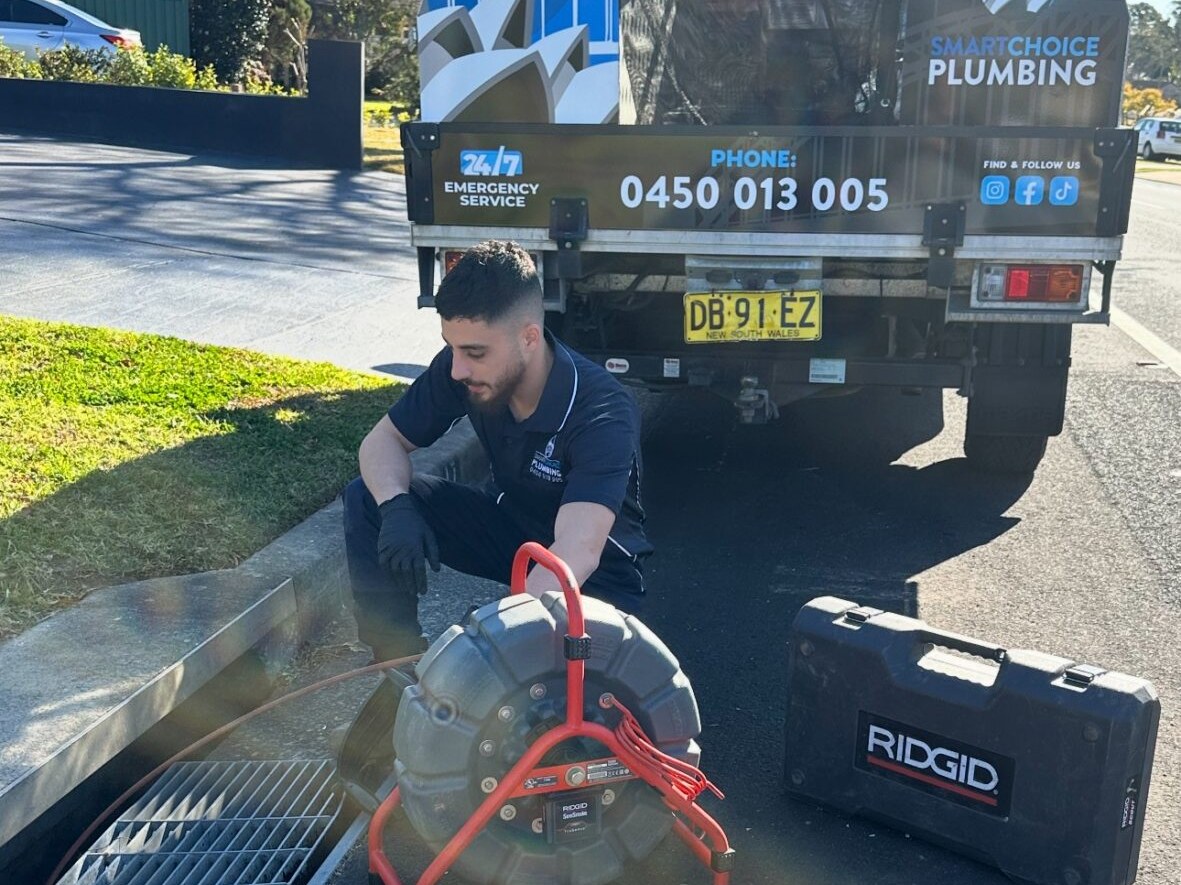
Different nozzles do different jobs. A penetrating nozzle opens a fully blocked line, a flushing nozzle carries silt and sand out of a stormwater run, and a root-cutting nozzle shears fine roots off at the pipe wall. Choosing the wrong one wastes the visit, which is why the camera work usually comes first.
Jet blasting also leaves a pipe in a condition worth inspecting. Once the walls are clean, a CCTV drain inspection actually shows the cracks, bellies and displaced joints that were hidden under the build-up.
Which Method Clears a Blocked Drain Faster?
On the clock, snaking usually wins; on the result, jet blasting usually does. An eel is out of the van and down the pipe in minutes with no water supply needed, which is why it remains the first move on many after-hours callouts where the priority is getting a toilet usable again tonight.
Jet blasting takes longer to set up and needs water on site, but it removes the material rather than displacing it. When the same drain has been snaked twice already, a third snake is a fair prediction of a fourth.
What Each Method Handles Best
The blockage itself decides the tool. These are the patterns that show up most often across Campbelltown and the wider Macarthur area:
- Tree roots at a joint
- Fat, grease and soap build-up
- Wet wipes, nappies and foreign objects
- Silt, sand and leaf litter in stormwater lines
- Collapsed, cracked or displaced pipe
Tree Roots
Roots respond to both, differently. An eel cuts the root mass out of the pipe and restores flow the same day; a root-cutting jet nozzle shears the hair back to the wall and flushes the fragments away, which buys considerably longer before the next intrusion. Neither fixes the crack the roots came through — that is a relining or replacement conversation.
Grease, Silt and Soap
Jet blasting is the clear answer here. Congealed fat coats the pipe wall rather than plugging one point, so a cable simply slices a tunnel through it and the wall stays coated. The same applies to sand and leaf litter in a stormwater line, where the material is loose and heavy and needs to be carried out, not pushed along.
Foreign Objects and Collapsed Pipe
Neither method is right for a solid object or a broken pipe. Water pressure will not move a toy or a rag lodged at a bend, and driving either tool into a collapsed section risks making the damage worse. A camera run first tells the plumber whether the problem is something to clear or something to dig up.
Why CCTV Inspection Matters for Campbelltown Drain Repairs
Smart Choice Plumbing locates and inspects before selecting a method, because the housing stock in the area varies so much. Established suburbs such as Minto, Ingleburn and Leumeah still carry vitrified clay sewer lines with rubber-ring joints that roots find easily, while newer estates around Oran Park and Gregory Hills run PVC that handles jetting comfortably and rarely has a root problem at all.
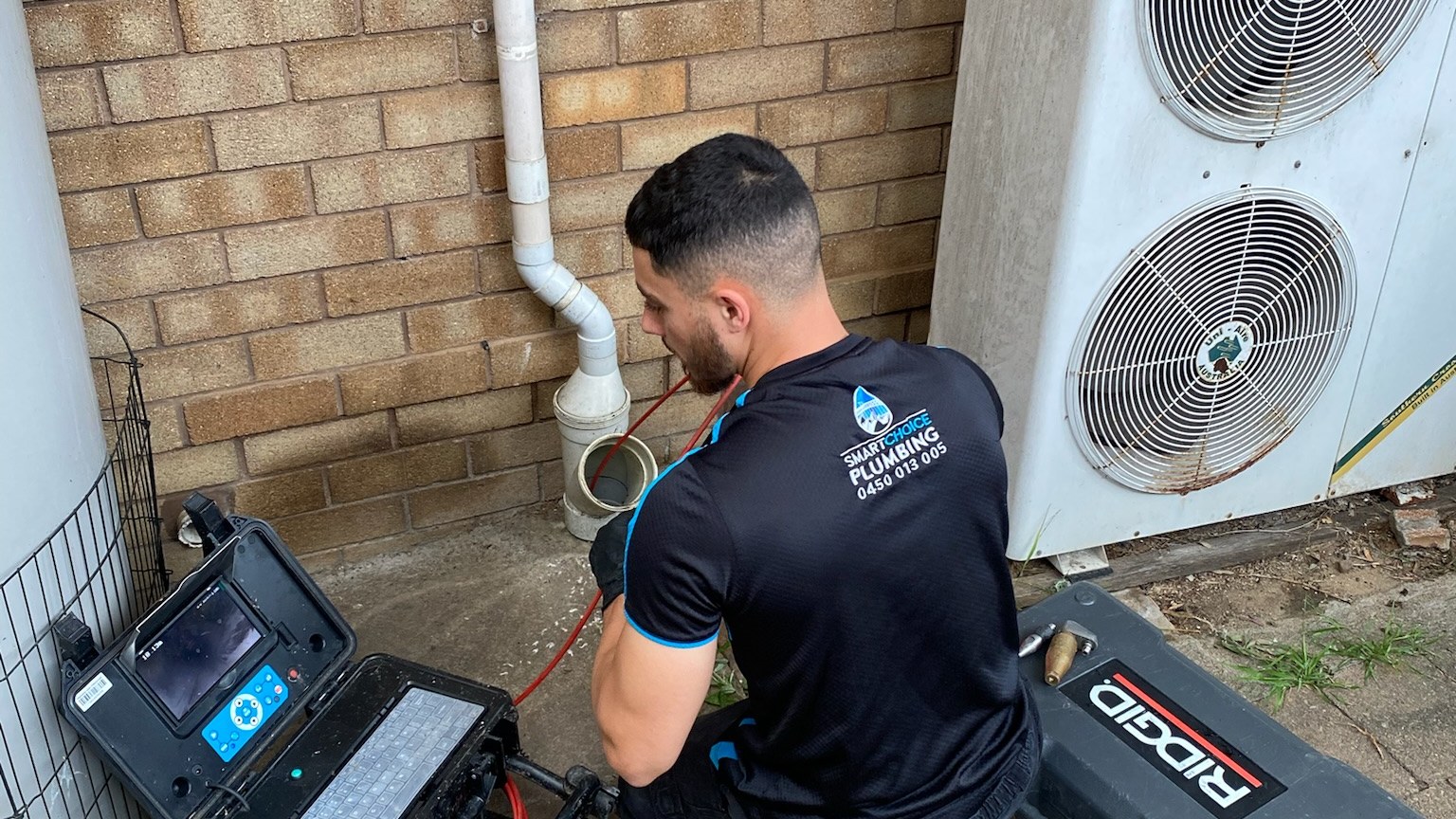
That distinction matters, because pressure suited to sound PVC is not automatically suited to an aged clay line with an open joint. Knowing the pipe material, the fall and the location of the blockage before any equipment goes down is what turns a guess into a repair — and it is why the same symptom gets two different answers on two neighbouring streets.
Which Should a Homeowner Choose?
Choose based on how many times it has happened, not just on the price of the visit. For a first-time blockage with an obvious cause, snaking can be a reasonable option. If a drain has blocked twice in a year, drains slowly across several fixtures, or gurgles when the washing machine empties, build-up is more likely. Hydro jetting vs snaking comes down to what is causing the blockage, with jetting often better suited to clearing built-up debris and a camera helping confirm what remains.
Cost follows access, pipe length and what the camera finds. A ground-level cleanout on a flat block is a straightforward visit, while a blockage reached through a roof vent or buried inspection opening takes longer. Smart Choice Plumbing confirms the price before any work starts, so the customer knows the cost before deciding.
How to Keep the Drain Clear Afterwards
Clearing the line is the fix; keeping it clear is a habit. Fat and oil belong in the bin once cooled, not down the kitchen sink where they set on the pipe wall as they cool. Only the three Ps — pee, poo and paper — go down the toilet, and that includes wipes labelled flushable, which do not break down in the way toilet paper does. Recurring toilet blockages are a signal, not bad luck.
Where roots are the known cause, a scheduled jet blast every 12 to 24 months costs less over time than repeated emergency callouts, and the camera footage from each visit shows whether the pipe is deteriorating fast enough to justify relining.
Sort a Blocked Drain in Campbelltown Properly
A drain that keeps blocking is telling the owner something about the pipe, not just the day. Smart Choice Plumbing locates the blockage with a camera, clears it with the method the pipe actually calls for, and shows the customer what the line looks like afterwards — backed by a lifetime labour guarantee and available 24/7, weekends and public holidays included. Do the job once. Do it right.
Call Smart Choice Plumbing on 0450 013 005 to book a blocked drain inspection across Campbelltown, Camden and the wider Macarthur area, or request an emergency plumber if the drain is overflowing now.
Frequently Asked Questions
Does jet blasting damage pipes?
Jet blasting is safe for sound pipes, including PVC, copper and cast iron, because the water follows the pipe rather than striking it. Damage risk sits with pipes that are already cracked, collapsed or badly deteriorated, which is why a camera inspection before jetting is standard practice on older sewer lines around Campbelltown.
How long does jet blasting a blocked drain take?
Most residential jet blasting visits run between one and two hours, including setting up, clearing the line and a camera run to confirm the result. A long sewer line, a difficult access point or heavy root intrusion can extend that.
Is drain snaking bad for pipes?
Snaking is safe when the cable and head are matched to the pipe, but an oversized cutting head in an old earthenware line can catch a joint and worsen an existing crack. A plumber who has seen the pipe on camera knows which head the line will take.
How much does it cost to clear a blocked drain?
Cost depends on access, how far along the blockage sits, and whether the line needs jetting and camera work or a straightforward clear. Smart Choice Plumbing confirms pricing before any work begins, with no obligation to proceed.
Can jet blasting fix tree roots permanently?
No method removes roots permanently while the entry point remains. Jet blasting with a root-cutting nozzle clears them back to the pipe wall and buys the longest interval between blockages, and tree roots in a sewer pipe have their own warning signs worth knowing, but a lasting fix means sealing the crack or joint the roots use, usually through pipe relining.
What are the signs a drain needs jet blasting rather than snaking?
Repeat blockages in the same line, several fixtures draining slowly at once, gurgling after the washing machine empties, or a drain that was cleared recently and has backed up again all point to build-up on the pipe wall rather than a single obstruction.